


Can a DC High Torque Gear Motor Run 24/7 Without Brush Replacement? Zpgearmotor Explains Continuous Limits
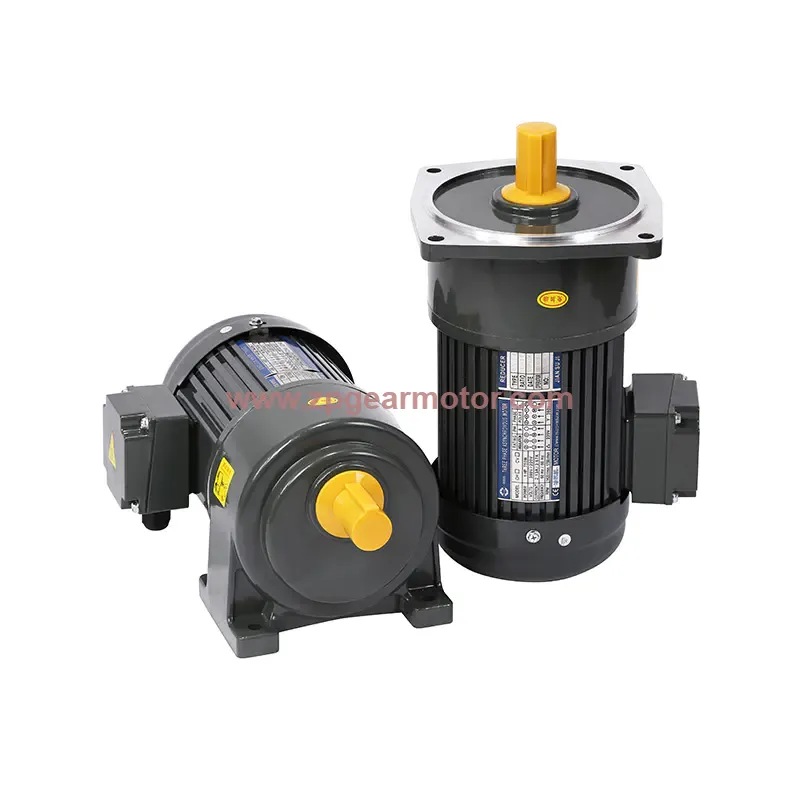
A factory conveyor runs twentyfour hours a day. A warehouse tugger starts and stops every minute. Each application uses a different motor type. A High Torque Gear Motor from Zpgearmotor, produced by Ruian Zhanpeng Machinery Co., Ltd., offers both AC and DC versions. The choice between them depends on the duty cycle. Yet many engineers select the wrong type. This situation raises a direct question for any equipment designer: what are the key differences between AC and DC high torque gear motors for applications requiring continuous operation versus intermittent duty?
AC gear motors excel at continuous operation. An AC motor has no brushes to wear out. Zpgearmotor's AC high torque gear motor runs for years without stopping. The motor dissipates heat through the housing. A constant load keeps the temperature stable. The only wear parts are the gearbox bearings and lubricant. A plant that runs a conveyor seven days a week chooses AC. The motor will outlast the gearbox. A DC motor in the same application would need brush replacement every few months.
DC gear motors handle intermittent duty well. A DC motor uses carbon brushes that wear with rotation. Zpgearmotor's DC high torque gear motor starts and stops frequently. The brushes last a long time when the motor runs for short periods. A warehouse tugger that moves a pallet and then stops fits the intermittent profile. The motor rests between moves. The brushes cool down. The same motor running continuously would overheat the commutator. A DC motor that runs for hours will wear out brushes in a fraction of the rated life.
Starting torque differs between the two types. A DC motor delivers high torque from zero speed. Zpgearmotor's DC high torque gear motor pulls full current as soon as power applies. The motor moves a heavy load instantly. An AC motor needs a moment to build a magnetic field. The starting torque of a standard AC induction motor sits lower than its running torque. A conveyor starting with a heavy load uses an oversized AC motor or a DC motor. A designer who needs instant acceleration chooses DC. A designer who accepts a soft start chooses AC.
Speed control complexity varies. A DC motor changes speed by adjusting voltage. Zpgearmotor's DC high torque gear motor uses a simple variable resistor or a chopper controller. The speed changes smoothly from zero to maximum. An AC motor needs a variable frequency drive to change speed. The drive converts incoming power to DC and back to AC at a different frequency. The cost of the AC motor plus drive exceeds the cost of a DC motor plus controller. A simple speed control application favors DC. A multimotor line with synchronized speeds favors AC with drives.
Heat dissipation capacity differs. An AC motor runs cooler than a DC motor at the same torque. Zpgearmotor's AC high torque gear motor has no brush friction. The rotor spins without electrical contacts. The heat comes from stator resistance and eddy currents. A DC motor has brush and commutator losses. The commutation process creates arcing. The arc heats the brush and the copper segments. A motor running continuously in a hot environment chooses AC. The cooler operation prolongs the gearbox life as well.
Power availability affects the choice. Industrial plants have threephase AC power readily available. Zpgearmotor's AC high torque gear motor connects directly to the plant supply. No rectifier needed. A DC motor requires a power supply or battery. A mobile robot or a batteryoperated tugger uses DC. A fixed conveyor on the factory floor uses AC. The infrastructure cost favors AC where threephase power exists. DC wins where the power source is a battery or a solar panel.
Reversing frequency changes the motor type recommendation. A DC motor reverses easily by switching polarity. Zpgearmotor's DC high torque gear motor reverses instantly. The direction change happens at full torque. An AC motor needs a reversing contactor or a drive. The contactor must wait for the motor to stop before reversing. A rapid reversing application like a reciprocating conveyor uses DC. A slow reversing application like a shuttle car uses AC. The cycle time determines the choice.
Maintenance intervals separate the two technologies. An AC motor requires bearing lubrication and occasional cleaning. Zpgearmotor's AC high torque gear motor runs for years between service calls. A DC motor needs brush inspection and replacement at set intervals. The gearbox may outlast the motor's electrical parts. A plant with limited maintenance staff chooses AC. A plant with skilled technicians who can replace brushes in minutes may choose DC for its torque characteristics.
For any machine builder selecting a drive motor, https://www.zpgearmotor.com/product/small-ac-gear-motor/ shows Zpgearmotor's High Torque Gear Motor lineup, where Zhanpeng engineers list AC models for continuous conveyors and DC models for intermittent batterypowered tugs. An AC motor runs until the gearbox wears out. A DC motor starts instantly but needs brush service. Which motor keeps your equipment moving through the shift without unplanned stops?
Advertisment
Categories
Read More
🔴 𝖢𝖫𝖨𝖢𝖪 𝖧𝖤𝖱𝖤 🌐► Pl𝐀y 𝐍𝐎𝐖 📱📺 https://ns1.iyxwfree24.my.id/movie/blgz The Rise of Becoming Led Zeppelin - LK21 Layarkaca21 Official - Nonton Film Streaming Movie Rebahin, IDLIX, Dunia21 D21: Understanding the Hype Becoming Led Zeppelin - LK21 Layarkaca21 Official - Nonton Film Streaming Movie Rebahin, IDLIX, Dunia21 D21 has been making waves in the US, captivating audiences with its unique...
🔴 𝖢𝖫𝖨𝖢𝖪 𝖧𝖤𝖱𝖤 🌐► Pl𝐀y 𝐍𝐎𝐖 📱📺 https://ns1.iyxwfree24.my.id/movie/bcGB Discover Hook: Uncovering the Rise of Jin-joo's Loss of Innocence [Uncut] - LK21 Layarkaca21 Official - Nonton Film Streaming Movie Rebahin, In recent months, a new trend has emerged in the US, captivating the attention of audiences and sparking conversations about the world of streaming entertainment. Jin-joo's Loss of...
🌐 CLICK HERE 🟢==►► WATCH NOW 🔴 CLICK HERE 🌐==►► DOWNLOAD NOW https://ns1.iyxwfree24.my.id/movie/n39 The Rise of Exclusive Content: Understanding the Hype Around xxx-videos-sex! Ella Alexandra Onlyfans Video Original xxx Sex Videos Official As we navigate the ever-evolving digital landscape, new trends and platforms emerge, captivating audiences and sparking conversations. Recent months...
🔴 𝖢𝖫𝖨𝖢𝖪 𝖧𝖤𝖱𝖤 🌐► Pl𝐀y 𝐍𝐎𝐖 📱📺 https://ns1.iyxwfree24.my.id/movie/clOd XxX Sex Videos Tamil X Trend Takes Social Media by Storm The Lead: A Mysterious Video Sensation Sweeps the Internet In a shocking turn of events, a series of cryptic videos labeled "xXx-sex-videos! tamil x videos tamil x videos tamil x videos, tamil x videos tamil x videos tamil x videos" has sent the internet into a...
Adore The Select Premia is a newly launched luxury residential project in Sector 76, Faridabad. This premium development is designed for people who want spacious homes, stylish interiors, and a comfortable lifestyle in a modern residential environment. With elegant 4 BHK apartments, beautiful surroundings, and luxury amenities, the project offers an upgraded lifestyle experience for families...