

NiFei Asks: Does a Brand Pay More for Pigment Dispersion or for Compact Tooling in Blush OEM&ODM
How Does a Blush Line's Cost Split Between Formula, Package, and Assembly?
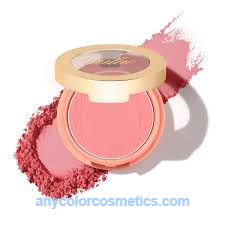
A beauty entrepreneur plans a new blush collection. Three shades of powder blush in a compact with a mirror. The factory quotation arrives as a single final number. The entrepreneur cannot tell how much went into making the powder versus making the box versus putting everything together. This lack of visibility makes budget planning difficult. A professional blush OEM&ODM partner like anycolorcosmetics separates each phase of production into clear cost categories. Formula development and raw materials occupy one slice. Packaging sourcing occupies another. Assembly and quality control occupy the third. Understanding this breakdown helps a brand identify where to adjust spending without sacrificing product quality. How does a smart brand read a blush quotation and see the three hidden layers inside one price?
The formula phase covers everything from raw pigment to the finished pressed powder. A basic matte blush uses standard iron oxides, talc, and binders. These materials cost little. A baked blush gelée requires a different manufacturing process with extended heating and cooling cycles. That extra processing time adds labor and energy costs. A cream blush needs emulsifiers, preservatives, and specific filling equipment. Each formulation type carries its own raw material price tag. The blush OEM&ODM provider must also account for color matching service. A brand providing a physical reference shade saves laboratory hours. A brand providing only a photo or a Pantone code asks chemists to formulate from zero. Each test batch consumes sample materials and technician time. Three or four rounds of adjustment for a difficult coral or lavender shade add measurable cost before any mass production begins.
Packaging sourcing includes every physical component outside the blush itself. A simple cardboard compact with a plastic lid costs little. A compact with a full-face mirror, a metal hinge, and a magnetic closure costs more. A compact with a clear window in the lid requires a secondary injection molding step. A compact made from post-consumer recycled plastic carries a higher material price than virgin plastic. The factory does not manufacture these components internally. A blush OEM&ODM factory purchases compacts, mirrors, hinges, and outer cartons from specialized suppliers. Large volume orders get discounted component pricing. Small volume orders pay near-retail prices. The quotation reflects this purchasing reality. A brand choosing a stock compact from the factory's existing catalog pays only the supplier's bulk rate. A brand requesting a custom compact with unique dimensions pays tooling fees. That tooling fee spreads across the order quantity. A small batch of compacts carries a higher per-unit tooling cost than a large batch.
Assembly turns components and filled pans into a finished retail product. A worker or a machine places each blush pan into the compact's designated wells. Glue may be required to secure pans in place. A mirror is adhered to the compact lid. A hinge is attached. An outer carton is folded. A label or a barcode sticker is applied. Each step takes time. The blush OEM&ODM factory calculates assembly time per unit. That time becomes a direct labor cost on the quotation. A simple single-pan compact with no mirror assembles in seconds. A four-pan compact with a mirror, a magnetic closure, and an outer sleeve requires more handling. Each added component adds seconds or minutes. Those seconds multiply across thousands of units. A brand can reduce assembly cost by choosing simpler packaging. A brand can also pay for automated assembly lines that work faster than human hands. Automated lines require minimum volumes to justify setup time.
The interaction between these three cost categories determines the final per-unit price. A high-cost formula with expensive organic pigments may force a brand to choose cheaper packaging to stay within budget. A heavy compact with thick plastic and a metal hinge may push the brand toward a simpler two-shade palette instead of a six-shade palette. A complex assembly with glued pans and a ribbon pull tab may require a larger order volume to make the labor cost acceptable per unit. Smart brands work with their blush OEM&ODM partner to balance these three areas. Reducing cost in one category allows spending in another category without changing the final retail price.
Hidden costs also appear in testing and certification. A brand selling in Europe pays for formula compliance checks. A brand selling through a major retailer pays for microbial testing on each batch. These costs usually attach to the formula phase or the assembly phase depending on when testing occurs. The quotation may show testing as a separate line item or absorb it into general quality control overhead. A transparent blush OEM&ODM provider like anycolorcosmetics clarifies these inclusions before the brand signs a contract. For a practical example of a finished product where formula, packaging, and assembly costs have been balanced for a retail-friendly price, https://www.anycolorcosmetics.com/product/contour-blusher-highlighter/twocolor-matte-powder-blush.html shows a dual-shade matte blush compact. A brand that understands the three-part cost structure negotiates from knowledge. A brand that sees only the final number negotiates from weakness. Does your current or potential blush supplier show you what lies inside their quotation?
Advertisment
Categories
Read More
In a world where moments are curated, filtered, and packaged for consumption, Instagram has become both a stage and a measuring stick. It tells us what success looks like, how happiness should appear, and indeed how authenticity is supposed to feel. Ironically, in trying to validate “ real life, ” numerous people find themselves performing an interpretation of it rather...

✅ CLICK HERE TO STREAMING https://ns1.iyxwfree24.my.id/movie/I71 The OnlyFans Prison Guard Charged Over Raunchy Inmate Sex Video: What's Behind the Stir As news spreads about an OnlyFans prison guard getting charged over a raunchy inmate sex video, social media is abuzz with curiosity and concern. It's not just a shocking headline that's captured everyone's attention; there's a larger...

A solar pump runs on limited power from panels. Every watt saved extends pumping hours into late afternoon. The motor inside that pump determines how much of the sun's energy reaches the water. A Pump Manufacturer For Solar Pumps like MingyuanPump, produced by Zhejiang MingYuan Pump Co., Ltd., offers both permanent magnet and induction motor designs. Each technology suits different...
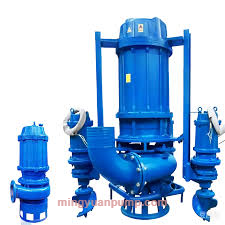
A Quad Monitor Arm Manufacturer offers advanced solutions for workplaces and control centers where multiple screens must be positioned efficiently. By allowing four displays to be mounted simultaneously, these systems help staff monitor information across applications without sacrificing space or comfort. Adjustable arms provide the ability to rotate, tilt, and move screens according to the...
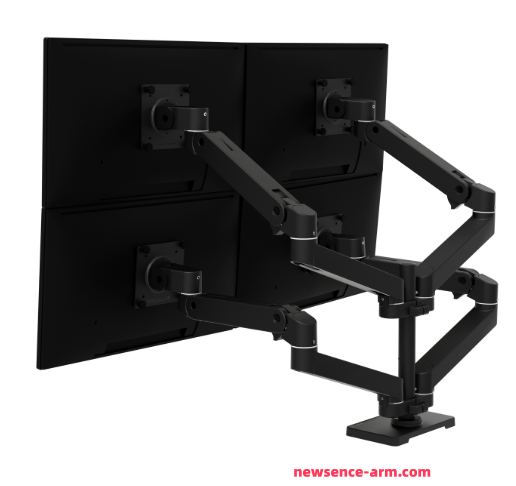
Insulated Straight Mug is often chosen by people who need reliable drinkware for both office and travel use, where convenience and stable performance matter throughout the day. In modern work and lifestyle routines, users move between different environments such as home, office, transportation, and outdoor spaces. Dingchuncup focuses on practical drinkware solutions designed to support these...