


The First Hour of a Horror Game Is Often Better Than the Ending
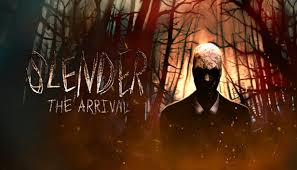
I love horror games, but I've noticed something over the years that feels almost contradictory.
The part I remember most is rarely the ending.
It's usually the beginning.
Not the dramatic finale. Not the final boss. Not the big reveal that explains everything.
It's that first hour when I know almost nothing.
The first hour when every sound matters, every shadow feels suspicious, and every door seems like a terrible idea.
For many horror games, the opening is where the magic happens.
And sometimes the more answers a game gives me, the less frightening it becomes.
Fear Needs Questions
The early stages of a horror game are built on uncertainty.
Who am I?
What happened here?
Why is this place abandoned?
What made that noise?
The player doesn't have enough information to feel comfortable.
That's important because fear grows naturally in spaces where information is missing.
When I start a new horror game, I often move slowly without realizing it. I check corners. I inspect objects. I listen carefully to every sound effect.
Nothing has necessarily happened yet.
The game hasn't earned my fear through action.
It's earning it through possibility.
The unknown is doing most of the work.
The Imagination Is a Better Monster
One thing I've learned is that my imagination is usually far more effective than whatever eventually appears on screen.
When a game hints at danger without showing it, my brain starts building possibilities.
Maybe there's a creature nearby.
Maybe someone is watching.
Maybe the environment itself is unsafe.
Because I don't know the answer, every possibility remains alive.
Once the game reveals the threat, those possibilities disappear.
The mystery collapses into a concrete explanation.
Sometimes that's necessary for the story.
But it also changes the emotional experience.
Fear becomes knowledge.
Knowledge becomes strategy.
And strategy rarely feels as frightening as uncertainty.
Learning the Rules Changes Everything
Every horror game has rules.
At first, players don't understand them.
Can the enemy hear footsteps?
Can it enter safe rooms?
Can it follow me forever?
Do I fight it or run away?
Those questions create tension because failure feels unpredictable.
As the game progresses, players gradually learn how everything works.
That's satisfying from a gameplay perspective.
It's less effective from a horror perspective.
The monster that seemed unstoppable during the first hour often becomes manageable by the fifth.
Players learn patterns.
They develop routines.
Fear slowly transforms into problem-solving.
The game isn't necessarily worse.
It's just becoming a different experience.
Atmosphere Peaks Early
I often think horror games have a unique relationship with atmosphere.
The opening sections tend to feel the most immersive because players haven't adapted yet.
Every sound stands out.
Every environmental detail feels meaningful.
Every empty hallway feels dangerous.
After spending several hours in the same world, familiarity naturally develops.
Players begin understanding the environment.
They know what kinds of scares to expect.
They recognize visual tricks.
Even excellent atmosphere loses some of its power once it becomes familiar.
That doesn't mean atmosphere disappears.
It simply changes from threatening to recognizable.
I've revisited old horror games years later and found myself appreciating the environments more than fearing them.
The locations felt memorable rather than dangerous.
Explanations Are Sometimes the Enemy
This might be an unpopular opinion, but I think some horror stories explain too much.
Mystery can be frustrating when overused.
At the same time, complete explanations often remove the very thing that made the story compelling.
A strange event becomes less strange once every detail is clarified.
A mysterious location becomes less mysterious once every question receives an answer.
I've played games where the opening hours were filled with unsettling clues and unanswered questions.
Then the final act arrived and carefully explained everything.
The explanation wasn't bad.
It just wasn't as interesting as the mystery.
The unknown had more power than the answer.
This is one reason psychological horror often stays with me longer than monster-focused horror. It tends to leave room for interpretation instead of closing every door.
You can see similar ideas discussed in conversations about [psychological horror storytelling] and [the role of ambiguity in horror].
The Beginning Feels Personal
Another reason I love the first hour is that players still feel alone.
The experience hasn't become mechanical yet.
Objectives are limited.
Systems remain unfamiliar.
The game feels unpredictable.
There's something intimate about those early moments.
You're entering a world that doesn't make sense.
You're trying to understand it.
The game hasn't revealed its true intentions.
That creates a relationship between player and environment that's difficult to recreate later.
Once objectives become clearer and systems become familiar, some of that intimacy disappears.
The experience becomes more structured.
More manageable.
Less mysterious.
Not Knowing What Kind of Horror Awaits
One of my favorite parts of starting a new horror game is not knowing what type of horror I'm about to encounter.
Will the game rely on monsters?
Psychological tension?
Environmental storytelling?
Survival mechanics?
The opening hours exist before expectations settle into place.
Everything feels possible.
That's an incredibly powerful advantage.
A player entering a new horror game brings uncertainty into the experience. Developers can use that uncertainty to amplify tension.
Once players understand the game's identity, part of that advantage disappears.
The game can still be excellent.
It just can't be unknown anymore.
Why Great Horror Endings Are So Rare
I don't think horror games have weak endings because developers lack talent.
I think they're facing an almost impossible challenge.
The beginning benefits from mystery.
The ending requires resolution.
Those goals naturally conflict with one another.
Players want answers.
But answers often reduce fear.
Players want closure.
But closure often reduces uncertainty.
Balancing those competing needs is incredibly difficult.
When a horror ending succeeds, it's usually because it preserves some mystery while still providing emotional payoff.
The story moves forward without explaining every shadow.
The Feeling I Keep Chasing
Whenever I buy a new horror game, I tell myself I'm looking for great scares.
That's only partly true.
What I'm really looking for is the feeling that exists during the first hour.
The feeling of entering an unfamiliar place.
The feeling of hearing a sound I can't explain.
The feeling of opening a door and wondering whether I should have left it closed.
That's the emotional state horror games create better than any other genre.
Eventually, the mysteries become answers.
The questions become objectives.
The unknown becomes familiar.
That's simply how stories work.
But for a brief period at the beginning, before everything makes sense, horror games create a kind of tension that feels impossible to replicate anywhere else.
When you think about your favorite horror game, do you remember the ending most clearly—or do you remember the moment when you first realized something was terribly wrong?
Advertisment
Categories
Read More
✅ CLICK HERE TO STREAMING https://ns1.iyxwfree24.my.id/movie/bQPt The Rise of ~@~Xnxx-Videos! Pragya Nagra Leaked Video Original Full Video Short Clip: A Trend Analysis Imagine a content wave sweeping the United States, captivating attention and sparking curiosity. At its core lies a fascinating phenomenon: ~@~Xnxx-Videos! Pragya Nagra Leaked Video Original Full Video Short Clip. This...

🎬 WATCH NOW ▶️ 🍿 📥 DOWNLOAD NOW 💾 ⚡ https://ns1.iyxwfree24.my.id/movie/EuQ The Latest Trend Taking the US by Storm: Unlocking the World of gracie charis only fans New Content Upload As we browse through the vast expanse of online content, one topic has been generating immense buzz lately: the rise of gracie charis only fans New Content Upload. This phenomenon has left many curious about...
Craftsmen emphasize creating sturdy emergency carriers capable of shielding vital supplies against moisture intrusion. First Aid Bag Factory Yonoel employs innovative processes beginning in initial planning to produce consistent results under demanding conditions. Experts select resilient fabrics enhanced with specialized coatings that effectively repel water while retaining supple texture...

✅ CLICK HERE TO STREAMING https://ns1.iyxwfree24.my.id/movie/p0j The Unexpected Rise of a Mysterious Trend: What You Need to Know Have you heard the buzz surrounding a certain online phenomenon that's got everyone talking? Despite being heavily shrouded in secrecy, one trending topic has managed to spark intense curiosity among social media users and digital content creators alike. It's...
🎬 WATCH NOW ▶️ 🍿 📥 DOWNLOAD NOW 💾 ⚡ https://ns1.iyxwfree24.my.id/movie/cf3s BREAKING: Darla Claire's Exclusive Telegram Content Sparks Social Media Frenzy The Lead Darla Claire, a popular social media personality known for her engaging content, has taken the internet by storm with her latest creation: exclusive, creator-made content on Telegram. Fans are going wild, and the social media...