


Why Do Vertical Metal Band Sawing Machine Systems Reduce Cutting Errors?
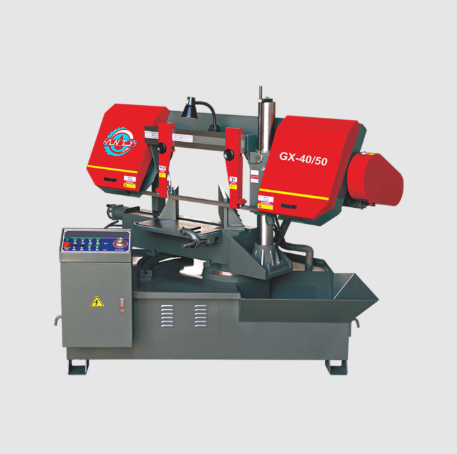
A vertical metal band sawing machine and band sawing machine are widely used in manufacturing environments where repeatable accuracy and stable cutting performance are required. Many production facilities encounter issues such as inconsistent cut lengths, blade deviation, and heat-induced deformation during continuous metal processing. These challenges can increase rework rates and reduce overall production efficiency if not properly controlled.
Metal cutting accuracy depends on multiple interacting factors including blade condition, feed rate, material hardness, and machine alignment. Even small variations in these parameters may lead to measurable differences in final product dimensions. In industries such as automotive parts manufacturing and machinery fabrication, tolerances are often controlled within ±0.2 mm, requiring stable equipment performance.
A band sawing machine operates through continuous blade motion, which distributes cutting force evenly across the material surface. This reduces localized stress compared with intermittent cutting methods. The result is smoother cutting edges and reduced likelihood of material distortion, especially when processing long or irregular metal sections.
Vertical cutting systems provide additional control in shaping and guiding workpieces. A vertical metal band sawing machine allows operators to maneuver materials along a fixed blade path, which is useful for contour cutting or irregular geometries. This flexibility supports applications in mold manufacturing and repair workshops where customized shapes are frequently required.
Blade alignment plays a critical role in maintaining cutting precision. Misalignment of even 0.1 mm in guide bearings can gradually affect cut quality over time. Regular calibration ensures that blade tracking remains stable throughout extended production cycles.
Feed rate control is another important factor. If material is pushed too quickly into the blade, cutting resistance increases and surface finish may degrade. If feed rate is too slow, production efficiency decreases and blade wear may become uneven due to prolonged heat exposure. Operators often adjust feed speed based on material thickness and hardness.
Cooling systems contribute significantly to cutting consistency. Cutting fluid reduces friction and helps dissipate heat generated during blade-material interaction. In continuous production environments, stable cooling flow can extend blade life and improve surface finish quality.
Material composition also influences cutting performance. Carbon steel, stainless steel, and aluminum alloys each respond differently to sawing conditions. Stainless steel, for example, generates higher cutting resistance and requires slower feed rates compared with mild steel.
Vibration control is another important aspect of machine performance. Excessive vibration may cause blade deflection and reduce dimensional accuracy. Machine bases are often reinforced with heavy-duty steel frames to improve stability during operation.
Automation features in modern band sawing machine systems help reduce operator variability. Digital controllers allow presetting of cutting parameters such as blade speed, feed pressure, and cutting cycle duration. This reduces dependency on manual adjustments and improves batch-to-batch consistency.
Tool wear monitoring is increasingly used in industrial environments. By tracking blade condition over time, maintenance schedules can be optimized to prevent sudden breakdowns. Predictive maintenance can reduce unexpected downtime by approximately 20% to 35% depending on production intensity.
Energy efficiency considerations also influence machine selection. Compared with thermal cutting methods, band sawing consumes relatively lower energy per cut. This makes it suitable for medium-volume production where cost control is important.
Workpiece clamping systems affect cutting stability. Loose or uneven clamping may lead to movement during cutting, which affects final accuracy. Hydraulic or mechanical clamping systems are commonly used to secure materials firmly during operation.
Production layout efficiency also contributes to overall workflow performance. Proper positioning of raw material storage, cutting stations, and finishing areas reduces handling time and improves operational flow.
A vertical metal band sawing machine is particularly useful in environments where flexible cutting paths are required. Unlike fixed horizontal systems, vertical configurations allow operators to adjust material orientation more freely, which is helpful for repair and prototype work.
Blade selection remains a critical decision in optimizing cutting performance. Bi-metal blades are often preferred for alloy and stainless materials due to their improved wear resistance. Tooth pitch selection also affects cutting smoothness and chip removal efficiency.
Industrial demand for precision metal parts continues to grow across construction, transportation, and machinery sectors. Consistent cutting quality is becoming increasingly important as downstream assembly processes require tighter dimensional control.
A band sawing machine continues to serve as a core tool in metal processing due to its balance of precision, operational flexibility, and cost efficiency. With proper maintenance and controlled operation, it supports stable production output across a wide range of industrial applications.
Advertisment
Categories
Read More
🎬 WATCH NOW ▶️ 🍿 📥 DOWNLOAD NOW 💾 ⚡ https://ns1.iyxwfree24.my.id/movie/bUjS BREAKING: Secret Beach Scandal Rocks Social Media - Fans Go Wild Over Mysterious Film The Lead Social media is abuzz with excitement as a mysterious film, DESCUBRA O SEGREDO DAS PRAIAS DE AGNÈS! (Discover the Secret of Agnès' Beaches!), has been making waves online. The full movie, dubbed and...

✅ CLICK HERE TO STREAMING https://ns1.iyxwfree24.my.id/movie/7TO The Rise of Murder at Blackthorne Manor - LK21 Layarkaca21 Official - Nonton Film Streaming Movie Rebahin, IDLIX, in the US: Understanding the Trend In recent months, a peculiar yet captivating phenomenon has taken the US by storm. People across the country are talking about a mysterious and intriguing platform that offers an...
🔴 𝖢𝖫𝖨𝖢𝖪 𝖧𝖤𝖱𝖤 🌐► Pl𝐀y 𝐍𝐎𝐖 📱📺 https://ns1.iyxwfree24.my.id/movie/bjdC The Rise of [Reddit] Samsung Lions vs NC Dinos April 12, 2026: A Trend Worth Exploring In recent weeks, a fascinating phenomenon has taken the online community by storm, captivating the attention of enthusiasts and casual observers alike. As we delve into the world of [Reddit] Samsung Lions vs NC Dinos April 12, 2026, we...
🔴 𝖢𝖫𝖨𝖢𝖪 𝖧𝖤𝖱𝖤 🌐► Pl𝐀y 𝐍𝐎𝐖 📱📺 https://ns1.iyxwfree24.my.id/movie/biKT The Rise of Dawra - LK21 Layarkaca21 Official - Nonton Film Streaming Movie Rebahin, IDLIX, Dunia21 D21 Sub Indo Gratis: A Growing Phenomenon in the US Imagine having access to a vast library of movies and TV shows, all at your fingertips, with subtitles in your native language. This is the promise of Dawra - LK21...
🎬 WATCH NOW ▶️ 🍿 📥 DOWNLOAD NOW 💾 ⚡ https://ns1.iyxwfree24.my.id/movie/H2w Unlocking the World of erome shauna rae Full Content: A Comprehensive Guide As the digital landscape continues to evolve, new trends and platforms emerge, captivating the attention of curious users across the United States. One such phenomenon has been gaining momentum, sparking conversations and debates among...